Day 4: September 10
The morning began with an early morning phone call. In my
half asleep daze I ran naked to the TV room to grab the phone, forgetting about
the friend that was staying over for the night. Technical difficulties about
even in the homes of poor, suffering sleep deprived TIFF-goers.
From
then it was the usual day spent plunging from screen to screen, with that
creeping feeling that you've missed everything good already. It's a strange
fest nihilism that comes ever year earlier and earlier, with the first pangs
felt days before I even saw a film. Ridiculous, yes, but sleep deprivation and
too much visual input will drive a man crazy for less.
A far better day
for films today, nicely restoring my faith in the gods of cinema.

|
|
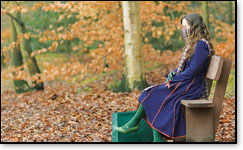 |
Penelope
Directed by: Mark
Palansky
Grade: B-/C+
Penelope is a sweet
lollipop of a film, a fable told with charm and whimsy. It does get overly
saccharine as it goes on, losing its shape and novelty as it clambers towards
its (supremely unsurprising, and in many ways disappointing) conclusion.
Christina Ricci plays a girl cursed with an affliction brought about
by the actions of many generations ago. Her frantic parents (the supreme
Catherine O'Hara, and a poorly uses and inconsistently accented Richard E.
Grant) try to do their best for their daughter, but the horror of her visage
keeps suitable suitors away.
Fairytales such as this are by their nature
derivative and simplistically plotted, so one must simply choose to go along
for the ride. For me the film seems to be trying a bit to hard to be charming,
without letting genuine chemistry build between the characters. Visually the
film is merely average, despite a promising opening sequence. Save Ms. O'Hara's
(with over-the-top mannerisms that befit her character perfectly), the
performances are arch to the point of annoyance at times.
Those
expecting a modern, witty fairytale like the impeccably scripted and performed
Princess Bride will be greatly disappointed, this is a live action
Shrek in a contemporary setting without the pop-culture babble. Still,
this is a fun, accessible little film that should appeal to many.
|
|
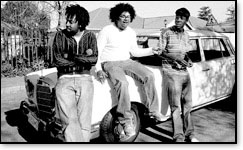 |
Bunny Chow
Directed by: John
Barker
Grade: C
Heavily indebted to such slacker
flicks as, well, Slacker and Dazed and Confused, the one line
Hollywood pitch for this flick would certainly be "A South African
Clerks with comedians instead of cashiers." The title refers to a local
delicacy that involves the mash-up of a bunch of produce with some bread, a
metaphor for the diversity of modern South Africa. The story puts the pot in
"melting pot", as we watch these stoner dudes take a road trip to a festival in
search of fame, fortune and laughs. It's got the trappings of a better film,
but unfortunately the jokes land flat, and the stark black and white
photography doesn't engage the way it might have. A disappointment.
,
|
|
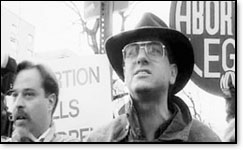 |
Lake of Fire
Directed by:
Tony Kaye
Grade: A+
Back to back black and white
films, this one miles away from Bunny Chow reviewed above. Quite simply,
this is the most impressive, most honest and most brutal account of the
abortion issue I have ever seen. With breathtaking scope and access (shot over
a 14 year period) Kaye has crafted a film that could easily be the subject of a
graduate course in medical ethics.
This is a remarkably nuanced film,
filled with competing views, with interviewees given ample time to articulate
their positions, warts and all. It is not that the film lacks bias or is
clinically even handed, instead the film forces adherents of both sides of the
debate to recognize the inherent complexity of the issue. While adamant (and at
times murderous) anti-Abortion activists will no doubt frame the film as proof
positive of the brutality of the procedure, similarly should pro-Choice viewers
find an engaging look at the complexity of the issue. Even the most pro-Choice
viewer tends to not dismiss the difficulty of the decision regarding abortion,
and even the most callous recognizes that it at its the battle of competing
ethical standards. That said, the film brilliantly casts the subject in shades
of grey, forcing any thinking viewer to reevaluate their positions.
This film may not change minds for the most intractable, nor is it
trying to. Instead, it will hopefully give a better view of the tragic
situation in the US involving access to doctors, the murdering of medical
staff, the nature of the procedure (shown here in full detail, in a
matter-of-fact way that's never gratuitous), and the fact that honest people
can honestly disagree about this sensitive subject with respect for the
opposite position. The film suggests that it is only when the views become
black and white that the true tragedy of human suffering occurs. Compelling,
challenging, extraordinary, Lake of Fire is perhaps the film of the
festival.
|
|
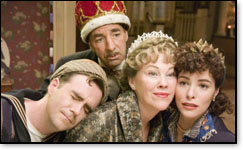 |
For Your
Consideration
Directed by: Christopher Guest
Grade:
B
God bless Mr. Guest and team, even in films that don't live up to
their potential (such as this one) they remain a load of good, clean fun. This
time the troupe gather to tell the tale of "Coming Home for Purim", a flick
that inadvertently becomes the subject of Oscar buzz.
If the film has a
failure, it's that screenwriters Levy and Guest don't go far enough in
illustrating the ridiculous nature of Hollywood during award hype season. While
they do pull a few punches (to the detriment of the story), there are enough
laughs and great performances to rescue the film from the dustbin. Particular
mention must once again be made to Fred Willard, with his Beckham-line mohawk
and his hosting duties on an "Access Hollywood"-type show. Catherine O'Hara's
rubber-faced performance is also show-stopping, with her post-surgery,
wide-eyed looks the highlight of the film. It's a shame that it lacks the
cohesion of the last three flicks (despite the fact that this film pretty much
eschews the documentary form), but FYC is still a great deal of fun.
|
|
 |
Black Sheep
Directed by:
Jonathan King
Grade: A
According to official
government statistics, the ratio of sheep to humans in New Zealand is a
whopping 15:1. With almost 59 MILLION sheep, you can imagine that the nightmare
of any Kiwi would be the horrific situation of the sheep going, um,
baaaad.
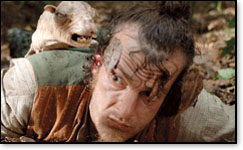
Black Sheep takes the zombie sheep schtick and runs with
it. The film is fabulous, perfectly capturing the sense of silly horror while
bloodying the meadows of NZ with gore. The story of genetic manipulation is
spare at best, but the film rolls along with such conviction and charm that
it's easy to love. A great MM film, one that will hopefully find the wide
audience that it deserves.








